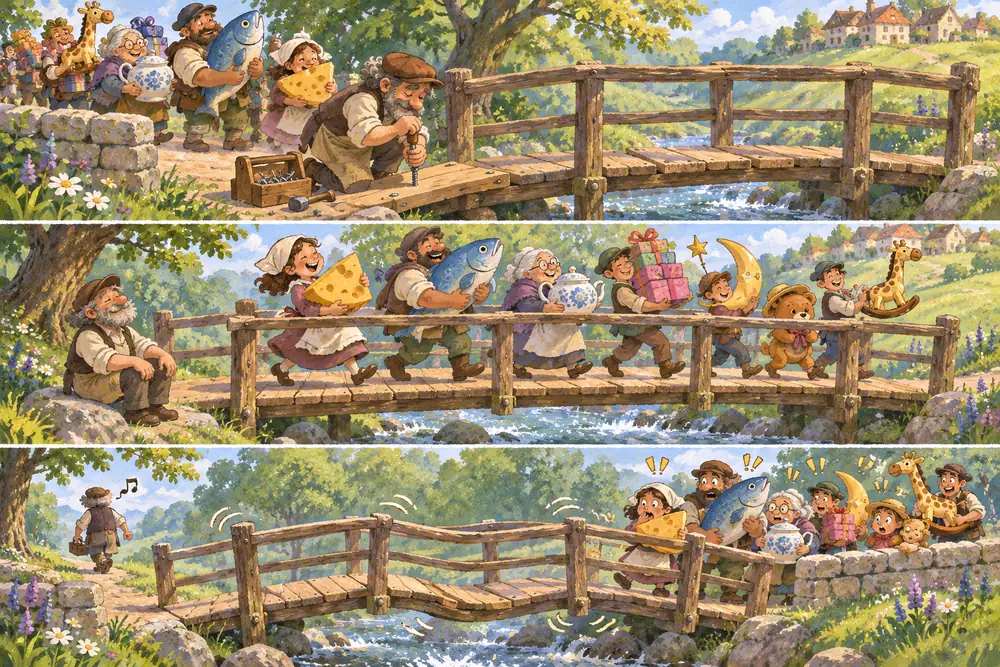
Long ago, there was a village beside a great river. People crossed it every day using an old wooden bridge. For years, an elderly craftsman had quietly maintained it. Each morning, he inspected the planks, replaced loose nails and reinforced any part that showed signs of wear.
One day, the village chief decided to hold a ceremony honoring people with outstanding contributions. The person who built new houses was praised. The person who extended the road received a certificate. The person who decorated the square was applauded by the whole village.
When it was the bridge keeper’s turn, the chief looked at his record and shook his head. “You didn’t build a new bridge this year. There is no major project here to recognize.”
The craftsman simply smiled and went home. A few months later, he fell ill and could no longer do the work. At first, no one noticed anything different. Then one morning, a plank broke. More places began to rot. Eventually, the bridge had to close for repairs, disrupting travel for the entire village.
Angrily, the chief asked, “Why didn’t anyone warn us that the bridge was deteriorating?” A villager replied, “Sir, someone used to take care of that every day.”
I think every organization has people like the bridge keeper. Their work does not always produce achievements that are easy to see. Some quietly check for errors. Some follow small tasks so a project does not stall. Others patiently maintain processes that, when they work well, are almost invisible.
We tend to recognize people who create a new result because it can be seen and measured. But preventing a problem also creates value. Of course, working quietly does not automatically mean working effectively, and organizations still need clear criteria for evaluating contributions.
Still, before deciding that a role does not create enough value, perhaps we should ask what would happen if that work were no longer done.
Some contributions become visible only after the person who made them is gone. A good organization should not have to wait until then to recognize their value.